
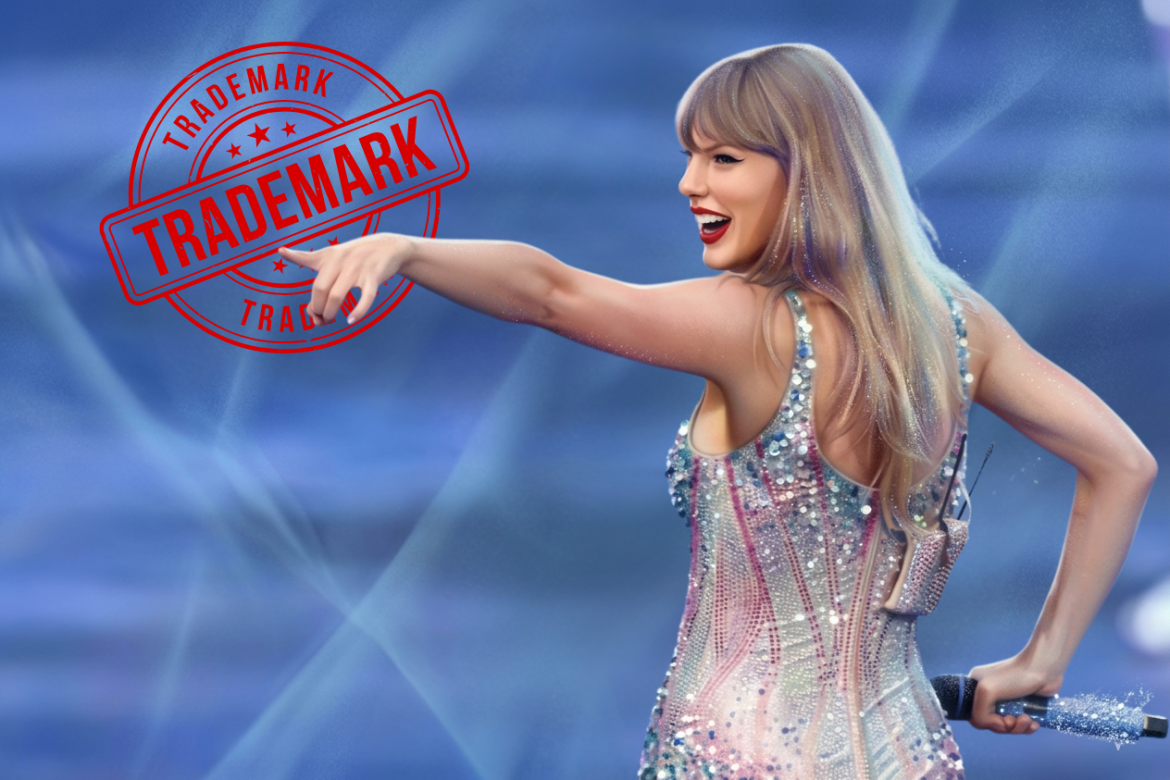
(Photo by Kate Green/Getty Images)
Taylor Swift is taking a major legal stand to protect her identity in the age of artificial intelligence. Following a strategy recently pioneered by actor Matthew McConaughey, Swift has filed several new trademark applications aimed at securing federal control over her voice and signature look.
On April 24, Swift’s company, TAS Rights Management, filed three specific applications with the U.S. Patent & Trademark Office. The filings, spotted by intellectual-property attorney Josh Gerben, indicate a strategic shift in how superstars defend themselves against unauthorized AI-generated content.
What Exactly is Taylor Tradmarking?
The new filings cover both audio and visual elements that are synonymous with the “Anti-Hero” singer:
- Voice Trademarks: Two applications cover the phrases “Hey, it’s Taylor Swift” and “Hey, it’s Taylor.”
- Visual Trademark: A highly specific description of an image featuring Swift in a multi-colored iridescent bodysuit with silver boots, holding a pink guitar on a pink stage.
The “McConaughey Strategy”
Historically, trademarks protect brands rather than people’s general personas. However, Swift’s legal team appears to be adopting the “trademark yourself” approach used by Matthew McConaughey, who successfully trademarked his “Alright, alright, alright!” catchphrase in 2025.
By moving these protections into the realm of federal trademark law, Swift gains a more powerful “legal arrow” than standard state-level right-of-publicity laws. Federal trademarks allow for nationwide enforcement and could enable her team to issue takedown notices to AI platforms—similar to how Disney enforces copyrights on its characters.
Why Now?
The move comes after several high-profile incidents where Swift’s likeness was misappropriated. From pornographic AI deepfakes to manipulated political images shared by Donald Trump during the 2024 election, the singer has faced a barrage of unauthorized digital replicas.
As attorney Josh Gerben noted in a recent blog post, “If a lawsuit were to be filed over an AI using Swift’s voice, she could claim that any use of her voice that sounds like the registered trademark violates her rights.”
While this legal theory hasn’t been fully tested in court yet, it marks a significant evolution in how artists are fighting back against the “wild west” of generative AI.
Here’s the image from the trademark application filing:

U.S. Patent & Trademark Office